Office decisions often turn on the tradeoff between transit-oriented credibility, modern growth environments, creative/adaptive space, and boutique historic character.
San Francisco Commercial Real Estate
Commercial Real Estate in San Francisco, CA
Explore San Francisco
What kind of space are you looking for?
Choose a space type first. Each opens a different set of San Francisco commercial districts.
Location intelligence
Find the San Francisco locations that fit your business
Rofo will help you define what you're looking for and create a Location Brief for your search.
No account required.
Market Snapshot
San Francisco Market Snapshot
San Francisco is a dense, district-driven commercial market where office character, transit orientation, client access, neighborhood identity, and operating requirements can change materially within a few blocks.
Technology, professional services, finance, design, healthcare-adjacent organizations, nonprofits, and neighborhood-serving businesses all create distinct location needs.
The strongest business-location decisions usually start with district fit before moving into buildings, economics, and current availability.
Retail opportunities are highly neighborhood-specific, with customer patterns and street context mattering more than broad citywide averages.
Industrial searches should separate Bayview's warehouse, distribution, food, contractor, fleet, and city-serving operations from Central Waterfront production, fabrication, maker, and practical-flex requirements.
Flex searches should distinguish operational flex in Bayview, production-led flex in Central Waterfront, and more adaptive office/R&D or creative environments in Dogpatch and selective SoMa buildings.
Key Commercial Districts
Business Location Context
- Client-facing and professional users often need credible access and a meeting environment that matches the brand.
- Growth-oriented companies may value modern office environments, recruiting context, and room to evolve.
- Creative or design-led companies may place more weight on building character and neighborhood feel.
- Industrial and flex users should choose geography from the operating requirement: logistics and service access point toward Bayview, while urban production and prototyping point toward Central Waterfront.
Rofo can turn this market context into a personalized Location Brief based on your business.
Start My SearchWhere should I look?
Start with the Right San Francisco Commercial Area
The district often shapes the decision before the building does. Start by comparing which areas fit the business model, customer access, employee commute patterns, budget, and next stage of growth.
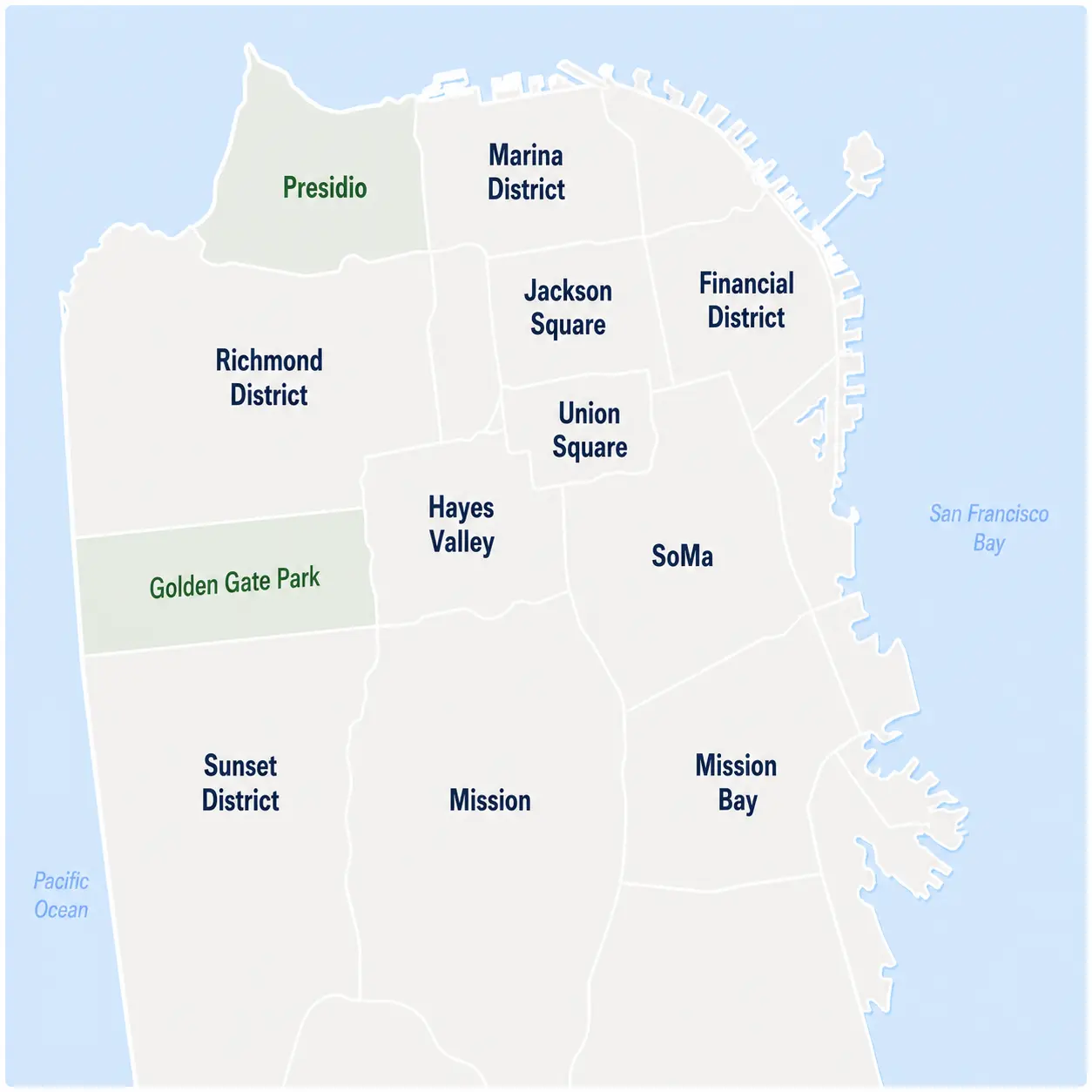
District map
Explore San Francisco districts
See how the city's major commercial districts fit together, then explore the areas that match your search.
Compare Commercial Areas
Tradeoffs worth checking early
Nearby districts can solve very different business problems. These comparisons show what changes when the search prioritizes image, transit, building character, flexibility, or cost.
SoMa vs Financial District
SoMa is broader, more mixed, and more adaptive; the Financial District is tighter, denser, and more formal.
Financial District vs SoMa
The Financial District is San Francisco's classic office core, with high-rise buildings, BART/Muni access, and a stronger finance, legal, and consulting signal.
SoMa vs Mission Bay
SoMa is more adaptive and mixed, with warehouse conversions, creative office buildings, and a broader central-city feel.
Hayes Valley vs Mission
Hayes Valley is smaller, more curated, and more boutique, with a strong fit for design, wellness, retail, and client-facing local services.
Marina District vs Presidio
The Marina District is a neighborhood commercial corridor environment; the Presidio is a campus-like setting with historic buildings and a more distinctive institutional feel.
Richmond District vs Sunset District
Both districts are west-side neighborhood commercial markets rather than downtown office districts.
Nearby commercial areas
Nearby markets may change the answer
If San Francisco is not the only acceptable location, nearby markets can change the answer around cost, commute patterns, building format, and availability.
What should I expect?
What to Expect When Leasing Commercial Space in San Francisco
Experienced tenants know that asking rent and availability are only part of the decision. Understand location strategy, timing, lease structure, and comparison criteria before tours start.
What experienced tenants consider
- Why proximity is not the same as fit
- Most companies search buildings first. Rofo starts with geography.
- How office needs change between 10 and 100 employees
- What companies misunderstand about a central location
Market context
Know the San Francisco market before comparing buildings
Rent, availability, and neighborhood dynamics matter most when they are tied back to your business needs.
Review San Francisco market context →Office Market Snapshot
Average Rent
$65–$85/SF/YR
↓
Typical office asking rent
Availability
Elevated supply
↑
Tenant-favorable availability
Market Trend
Tenant-favorable market
→
More options and negotiating flexibility
Notable Areas
Financial District
SoMa
Mission Bay
Jackson Square
Common tenant search areas
Commercial Leasing Guide
Know the questions before the tour
Lease structure, timing, tenant improvements, and broker roles can shape the real cost and risk of a space. Use these guides when the location is promising but the leasing details still need context.
Example Buildings
Example Commercial Buildings in San Francisco
Buildings make more sense after the location strategy is clear. These examples illustrate the types of environments businesses may evaluate; they do not indicate current availability.
Building Examples
Use buildings to understand the market
Review examples to understand building types, locations, and tradeoffs before checking current availability or requesting introductions.


What to Expect
Space type changes the search
Office, retail, industrial, coworking, and flex searches each raise different questions about location, layout, access, buildout, and cost.
Office by Business Type
Start with the right office districts
Different businesses should begin the San Francisco office search in different districts. These Business Briefs explain the first places Rofo would compare and why.
Common searches
When you are ready to look at space
How do I get the deal done?
Work with a Local Commercial Real Estate Expert in San Francisco
A broker can help validate availability, pricing, lease terms, and building-specific tradeoffs when the search is ready for live market review. The Location Brief keeps that step grounded in the business requirements.
Choose when to move from analysis to introductions
Start with an initial location analysis. Additional building examples, market information, or local introductions may be available depending on the market, requirements, and partner coverage.