
Transamerica Pyramid Center
600 Montgomery St
Property type
Office Space
Common in this district
Creative firmsDesignProfessional services
Explore property →Jackson Square combines historic brick and masonry buildings with smaller offices, design businesses and client-facing professional firms. Users often consider it when they want character and a more intimate scale without leaving the downtown orbit. Its older, fine-grained building stock distinguishes it from Financial District towers and SoMa’s larger converted or newly developed spaces.
Common across the district; individual buildings vary.
A few examples that show the range of commercial space found in Jackson Square.
600 Montgomery St
Property type
Office Space
212 Sutter St
Property type
Office Space
For a specific space: Confirm current availability and the exact condition, configuration, access, and permitted use of any specific space.
Compare the location against how your business actually operates.
Understand Jackson Square as a historic boutique office district at the edge of the Financial District, with smaller-scale commercial buildings, design and professional-service texture, and downtown access without a tower-core feel.
Rofo will help you define what you're looking for and create a Location Brief for your search.
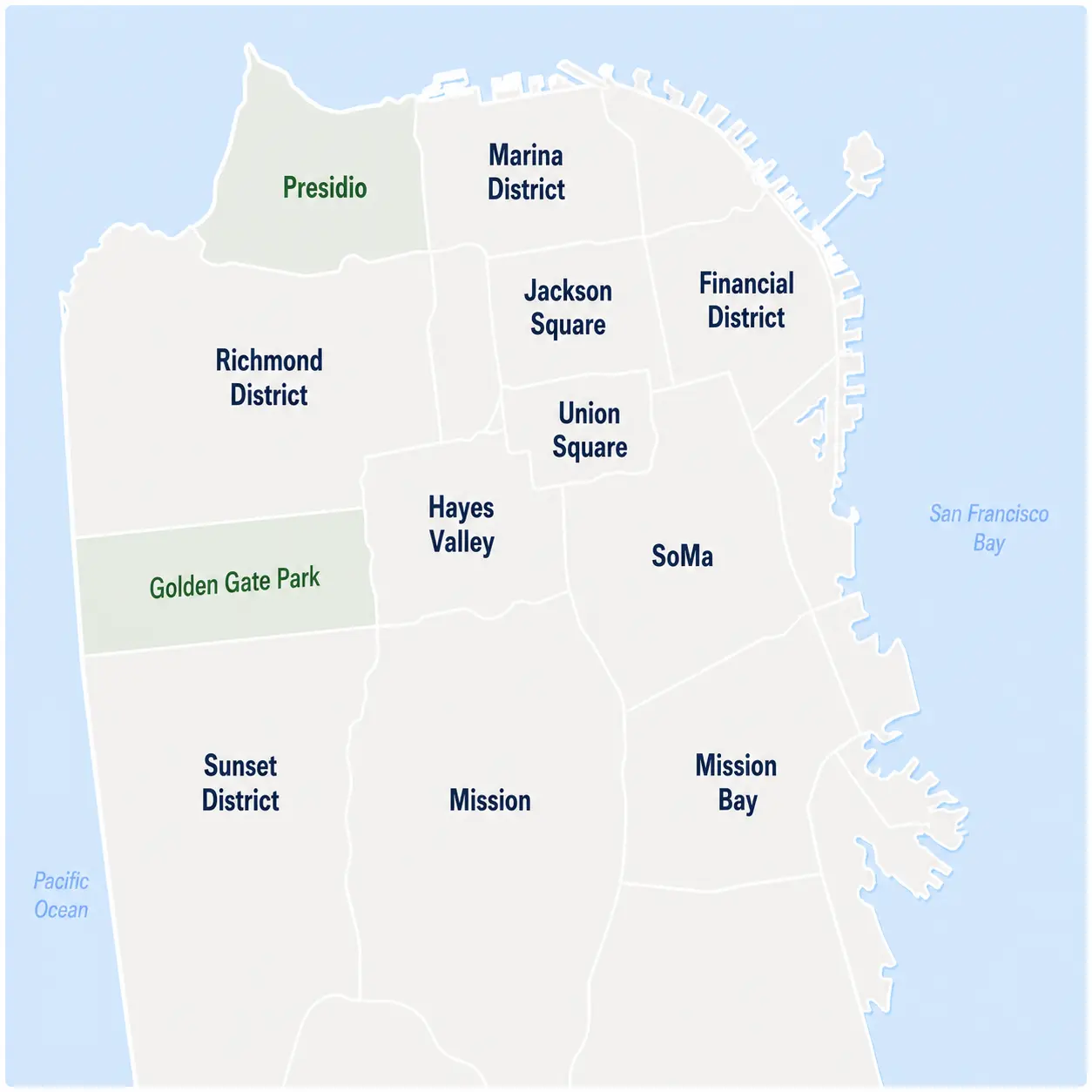
Use the map and links to compare nearby commercial areas.
Professional firms do not always need the biggest downtown signal. Sometimes the stronger move is a quieter office district that communicates judgment, character, walkability, and proximity to clients without feeling generic.
Historic boutique commercial district at the edge of the Financial District, with smaller-scale office, design, and professional-service texture.
Jackson Square is best read as a softer downtown edge: smaller historic commercial buildings, narrow blocks, and boutique office settings close to the Financial District without matching its tower profile.
Boutique office, design-oriented commercial uses, professional services, and street-level retail support the district's identity more than large-floorplate downtown office inventory.
It fits teams that want downtown access and client proximity, but prefer a smaller-scale, character-rich setting over a formal Financial District tower.
The district sits between the Financial District, North Beach, Chinatown, and the Embarcadero, so its value is partly in edge access rather than being a standalone office core.
Jackson Square is a smaller historic boutique office district at the edge of the Financial District, useful for professional-service, design, and client-facing users that want downtown access without a tower-core feel.
Compare if formal tower-core office identity is more important than boutique historic character.
Compare if adaptive creative-office scale and broader central-city texture matter more.
Compare if newer institutional or life-science office context could fit better than boutique historic character.
Compare later for waterfront-edge office and visitor-facing commercial context.
A strong Jackson Square Commercial Market Evidence collection explains the district's character-driven office logic without treating every historic building as interchangeable. The collection must show role diversity, comparison value, tenant fit, and clear tradeoffs against Financial District, SoMa, and Mission Bay alternatives.
Levi's Plaza is the clearest example of Jackson Square as a calmer, lower-rise office environment rather than a conventional downtown tower district.
What it does not prove: May not offer the same central-transit simplicity, tower visibility, or large contiguous expansion path as core Financial District alternatives.
1000 Sansome explains the brick-and-timber office character that makes Jackson Square commercially different from the Financial District tower core.
What it does not prove: Older historic stock can require closer validation of suite condition, accessibility, loading, expansion capacity, and modern workplace infrastructure.
901 Battery helps explain the district's appeal to creative, design, brand, and boutique professional firms that want a polished but less formal downtown setting.
What it does not prove: The setting can be less efficient for companies that need heavy transit volume, large continuous floors, or a more institutional address signal.
930 Montgomery represents the client-facing executive side of Jackson Square, where smaller firms use historic character as part of the business signal.
What it does not prove: May be less suitable for teams that expect institutional tower amenities, deep parking options, or straightforward expansion into larger contiguous space.
75 Broadway explains the smaller-format office stock and northern transition that keep Jackson Square distinct from both the Financial District and North Beach.
What it does not prove: The Broadway edge may feel less central for transit-heavy teams and may not provide the institutional infrastructure of larger CBD buildings.
924 Sansome is a compact example of the older commercial building pattern that gives Jackson Square its creative and boutique-office usefulness.
What it does not prove: Users should validate building systems, accessibility, elevator service, and suite configuration because smaller historic buildings vary meaningfully by asset.
650 California helps define the edge condition where Jackson Square's character-driven office market meets more formal Financial District and Nob Hill-oriented tower inventory.
What it does not prove: It can dilute the pure Jackson Square character story and may feel closer to a Financial District tower decision than a boutique neighborhood choice.
The Ice House explains the historic adaptive-reuse and design-oriented side of Jackson Square near the north waterfront edge.
What it does not prove: The location and format may be less useful for conventional corporate users that prioritize central transit, standardized amenities, or broad expansion options.
These examples explain durable operating patterns. Confirm current availability, suite condition, permitted use, and property-specific capability separately.
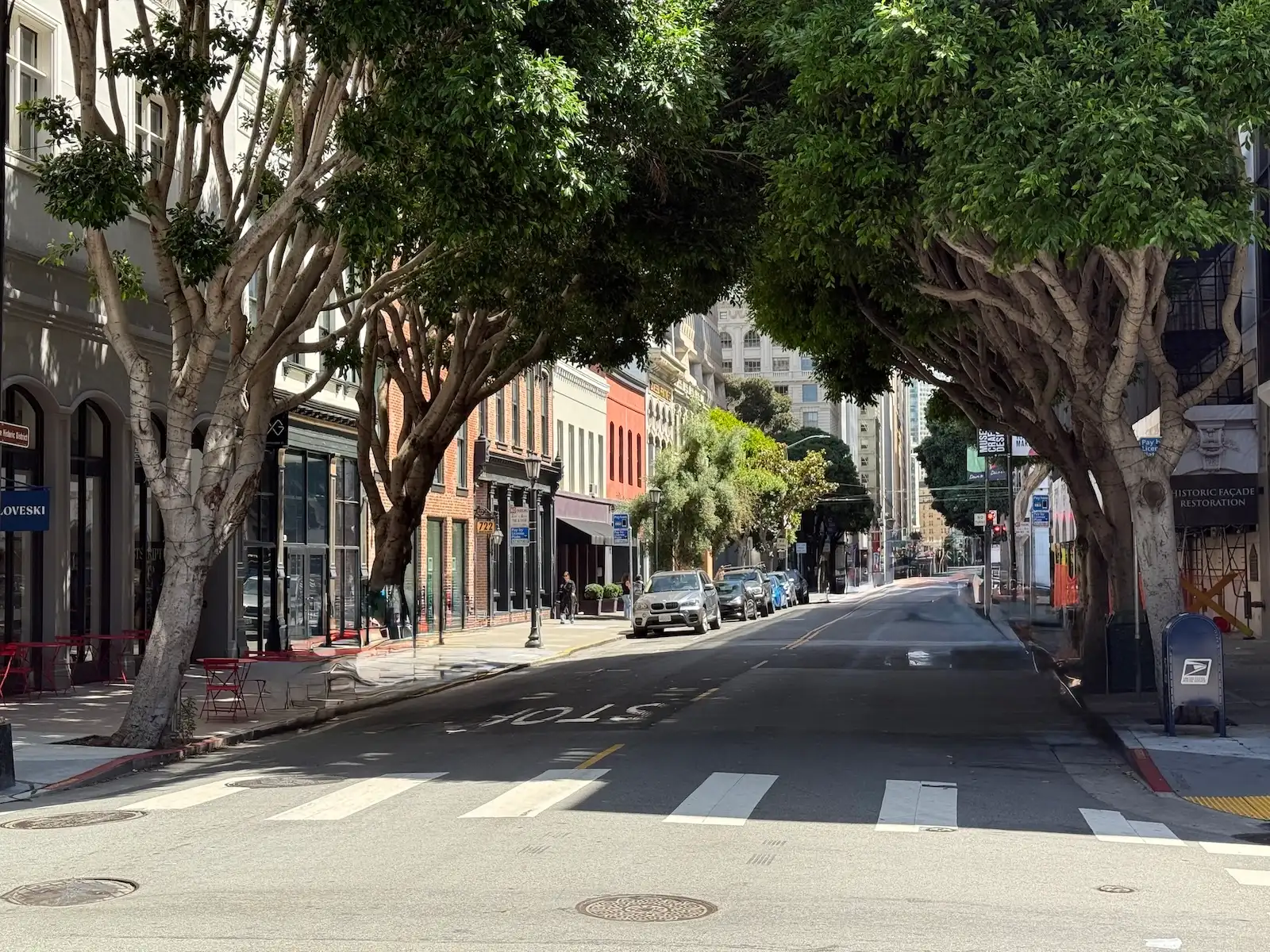
A few views that show Jackson Square’s smaller-scale historic commercial blocks at the edge of San Francisco’s downtown office core.
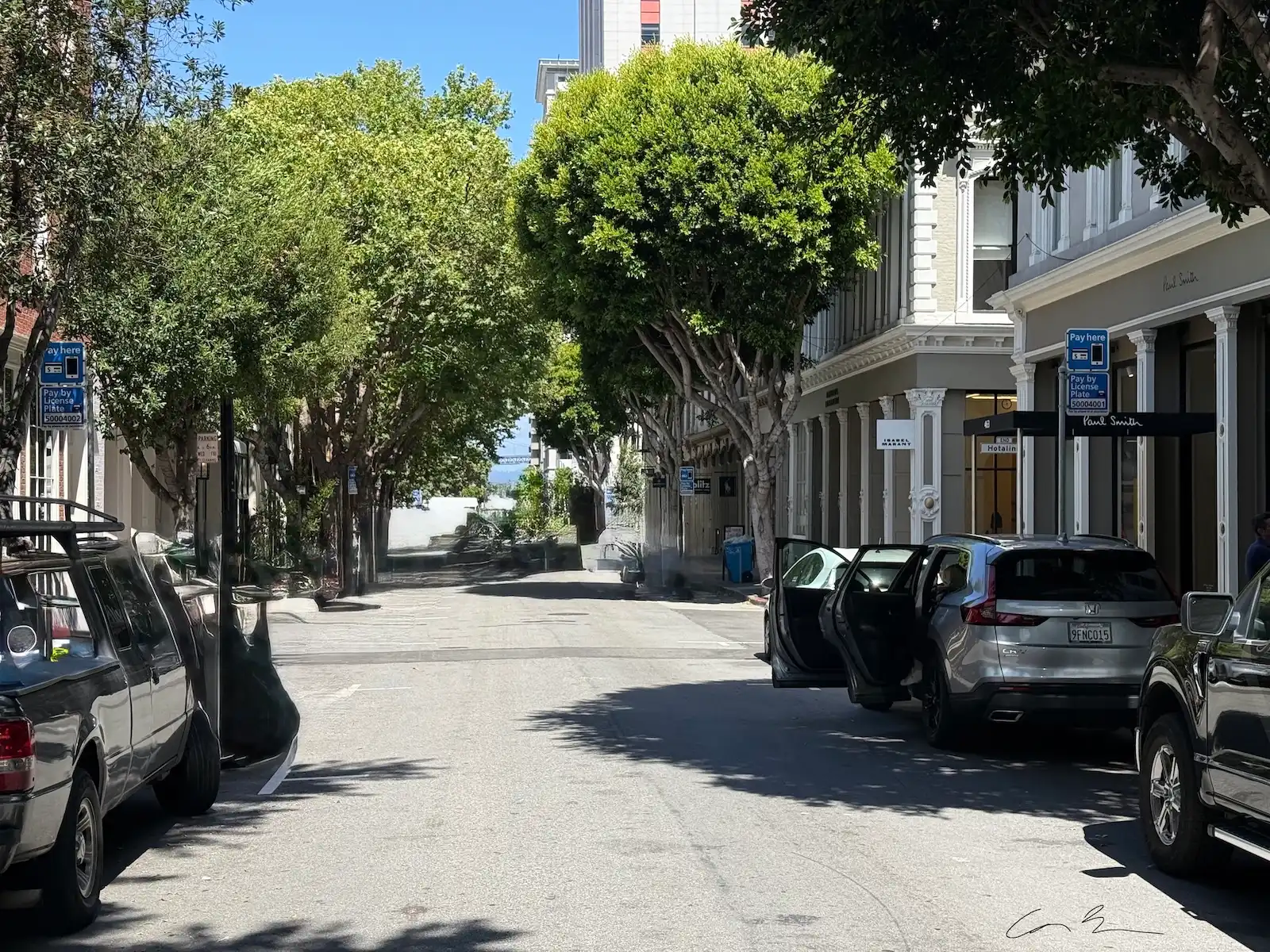
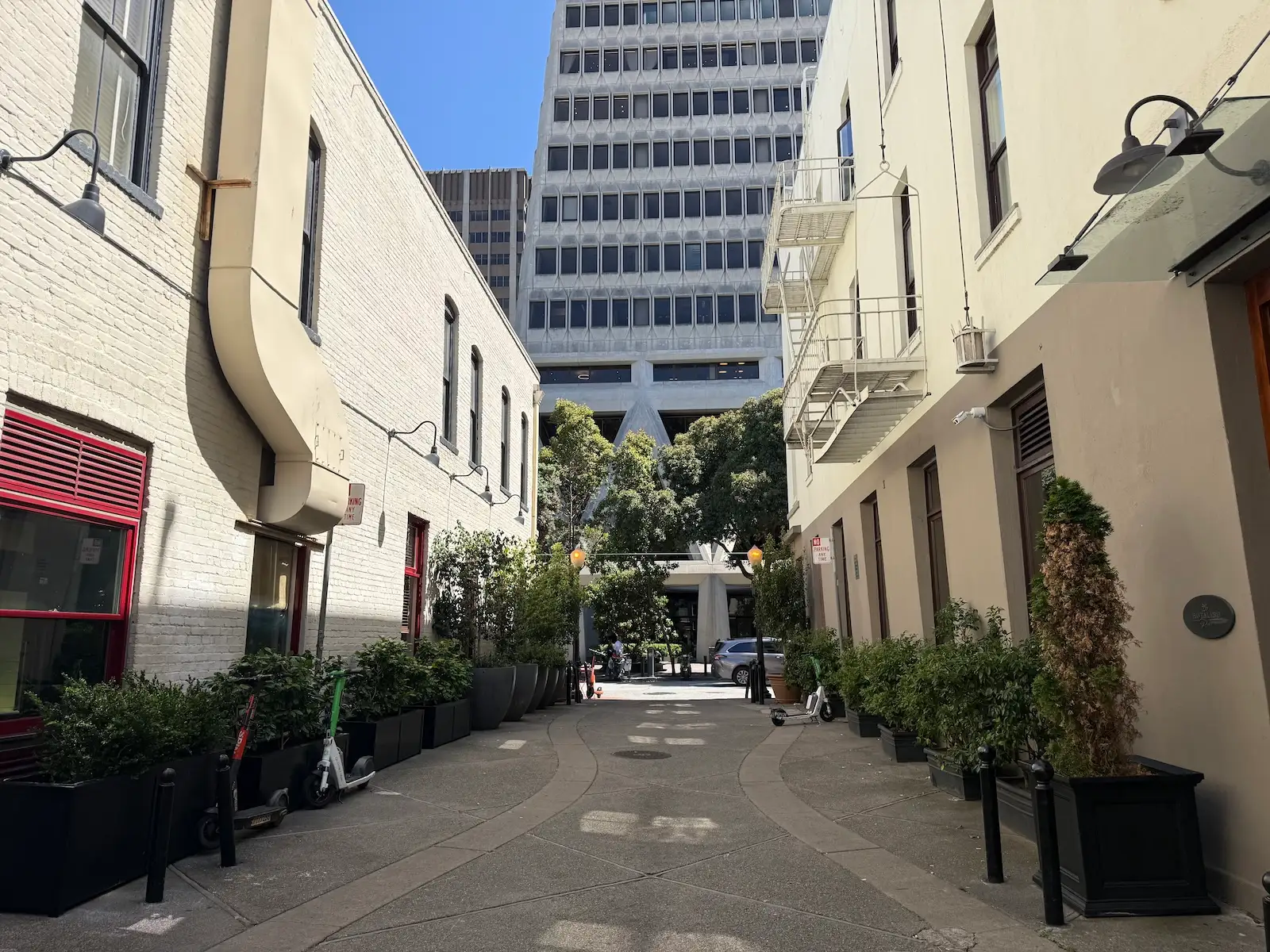
These certified examples show how this location can fit different business needs. They are examples, not universal answers.
Use these comparisons to see how representative buildings express different tradeoffs within and around the district.
Long known for boutique financial firms and creative offices, Jackson Square has recently attracted AI startups, venture investors, and technology companies looking for a more intimate environment than larger downtown districts.
Smaller buildings, walkability, and proximity to the Financial District give Jackson Square a distinctly different character from Mission Bay or SoMa. Companies considering Jackson Square often compare it with nearby downtown districts while prioritizing atmosphere and location over large campus buildings.
Use these relationships to read Jackson Square as a historic boutique office edge near the Financial District, not as a generic historic or visitor district.
More formal, vertical, and transit-centered immediately south of Jackson Square, with stronger large-office and client-facing downtown identity.
Adds ferry, waterfront, and downtown edge context to Jackson Square's smaller historic commercial fabric.
More neighborhood-commercial and visitor-facing to the north, with less direct office-core identity.
A dense historic district nearby that helps explain the northern downtown edge, but differs from Jackson Square's boutique office role.
Broader and more mixed-use south of Market Street, with larger adaptive and creative-office environments.
Explore commercial space types across the broader San Francisco market.
Use the broader city page and market guide to continue comparing commercial real estate options across San Francisco.