Archive for the ‘Rofo Help and FAQ’s’ Category
The 5 Best Ways to Find Business Space for Your Service Company

Finding the right business space can make or break your service company’s reputation, operations, and growth potential. Whether you’re in consulting, legal services, marketing, or property maintenance, the space you occupy speaks volumes about your professionalism and credibility. From visibility to logistics, there’s plenty to consider—and plenty of options beyond scrolling endless listings. Here are five powerful ways to land a business space that fits your brand, your budget, and your future.
1. Tap into Local Commercial Brokers
Commercial real estate brokers aren’t just for big companies—they’re goldmines of market intel and off-market opportunities. A broker specializing in your sector can help negotiate better lease terms and steer you away from properties with hidden operational pitfalls.
Why it works:
– Brokers have access to listings not publicly advertised.
– They can assess zoning, accessibility, and proximity to competitors.
– Many offer guidance through lease vs. purchase decisions.
Pro Tip: Look for brokers who’ve worked with similar service-based businesses. They’ll understand your unique flow of clients, hours of operation, and layout requirements.
2. Leverage Online Listing Platforms Strategically
Sites like ROFO offer thousands of searchable commercial properties. But instead of casting a wide net, filter with precision. Use advanced search tools to narrow by square footage, property type (office, flex space, retail), lease length, and amenities.
Optimization tips:
– Set alerts with specific keywords like “service suite,” “turnkey,” or “client-ready.”
– Examine whether properties allow interior customizations or signage.
– Cross-reference listings with local zoning maps and neighborhood reputation.
SEO Angle: Create your own content (like this post!) targeting phrases such as “best office spaces for [your service type] in [your city]” to attract landlords actively searching for tenants.
3. Explore Co-working and Shared Office Providers
For startups and small-scale service companies, shared spaces offer flexibility without long-term commitments. Providers like WeWork, Regus, and local hubs often have private offices, mail services, and client-ready conference rooms.
Ideal for:
– Businesses needing a professional front without full-time overhead.
– Early-stage ventures that want scalable space as they grow.
– Remote-first teams needing occasional in-person meetups.
Bonus: Many co-working spaces foster networking with other business owners, leading to referrals and cross-industry partnerships.
4. Network Within Your Industry and Local Chambers
Word-of-mouth still reigns in business real estate. Attend local chamber of commerce meetings, business expos, or trade associations relevant to your service niche. Building owners and current tenants often share upcoming vacancies before they’re listed publicly.
Why it matters:
– Off-market spaces often come with more negotiation flexibility.
– You’re engaging with landlords who prefer long-term tenants with referrals.
– Chambers often have exclusive access to municipal development plans, including new commercial builds.
Example: A legal tech firm may learn about underutilized floors within law office buildings looking for synergies. Likewise, a digital marketing service might tap into creative hubs looking to fill spots near design studios.
5. Partner with Property Developers and Real Estate Investors
New-build projects and under-renovation properties offer massive customization potential. Developers often seek anchor tenants early on to help shape the layout and amenities. If you have a solid business model and brand, this approach gives you influence over the final design—and potentially discounted rent.
Consider this approach if:
– You need specialized layout features like client lounges, workshop areas, or tech labs.
– You’re expanding regionally and want uniformity across locations.
– You’re willing to wait several months for a space to be ready.
How to connect: Reach out via LinkedIn, local business events, or real estate investment groups. Pitch your company as a stable, service-driven tenant with long-term upside.
Finding business space for a service company isn’t just about square footage—it’s about alignment with your goals, customer experience, and operational needs. By going beyond traditional search methods, you gain access to spaces that reflect the quality of service you provide. Whether you’re booking boardrooms or fielding clients for consultations, the right environment elevates everything.
Want help tailoring your next move to your brand, audience, or location? Let’s brainstorm space search strategies customized for your niche.
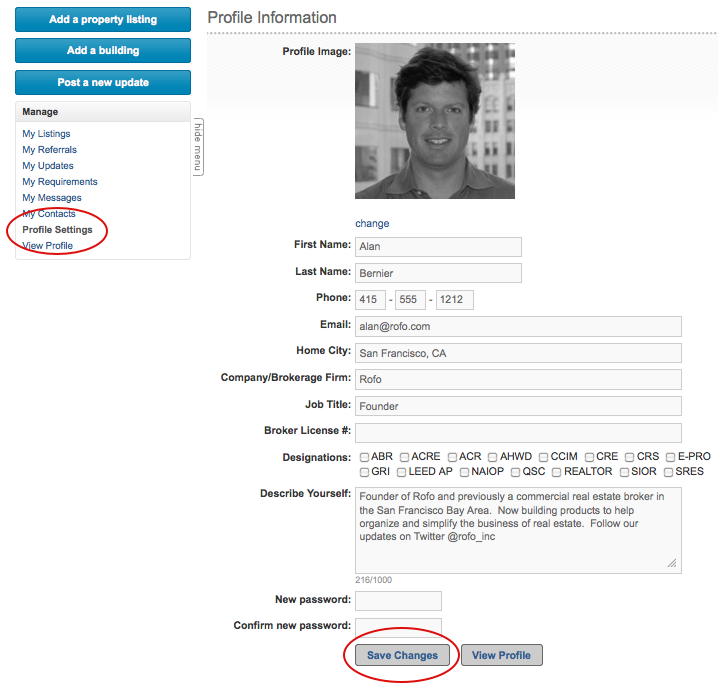
How to create a commercial real estate profile on Rofo
1) Go to www.rofo.com and sign in.
2) Click on Profile Settings.
3) Once you’ve added your photo and description click Save Changes
Best practices:
Complete all fields and provide a brief description of your role/expertise. Be sure to include a profile photo. Your profile gets attached to your listings, activity, and all Rofo introductions. It personalizes the experience and creates more meaningful real estate connections.